Showing posts with label rice. Show all posts

Wednesday, March 1, 2017

Black Lentils with Black Rice & Black Shiitake Mushrooms


Four exceptionally nutritious ingredients form the core of this simple but delicious meal, perfect for warming up the last chilly days of winter. According to the principles of Traditional Chinese Medicine, these four foods have the ability to strengthen the "yang" energy of the body, which is created and nurtured in the area called the "Life Gate Fire", or  Ming Men Huo. 

Assembly is easy; simply measure the ingredients into a pot and cook for about one hour.  It's best to use a heavy pot with a thick bottom and tightly fitting cover. A simple kitchen tool called a flame tamer or heat diffuser is useful for cooking legumes and grains; it helps heat to penetrate evenly without scorching the bottom of the pot.  Slow, gentle cooking allows the grains and lentils to steam thoroughly and encourages the aromatic flavors to mingle.

 Yield: Roughly five servings.

Ingredients:

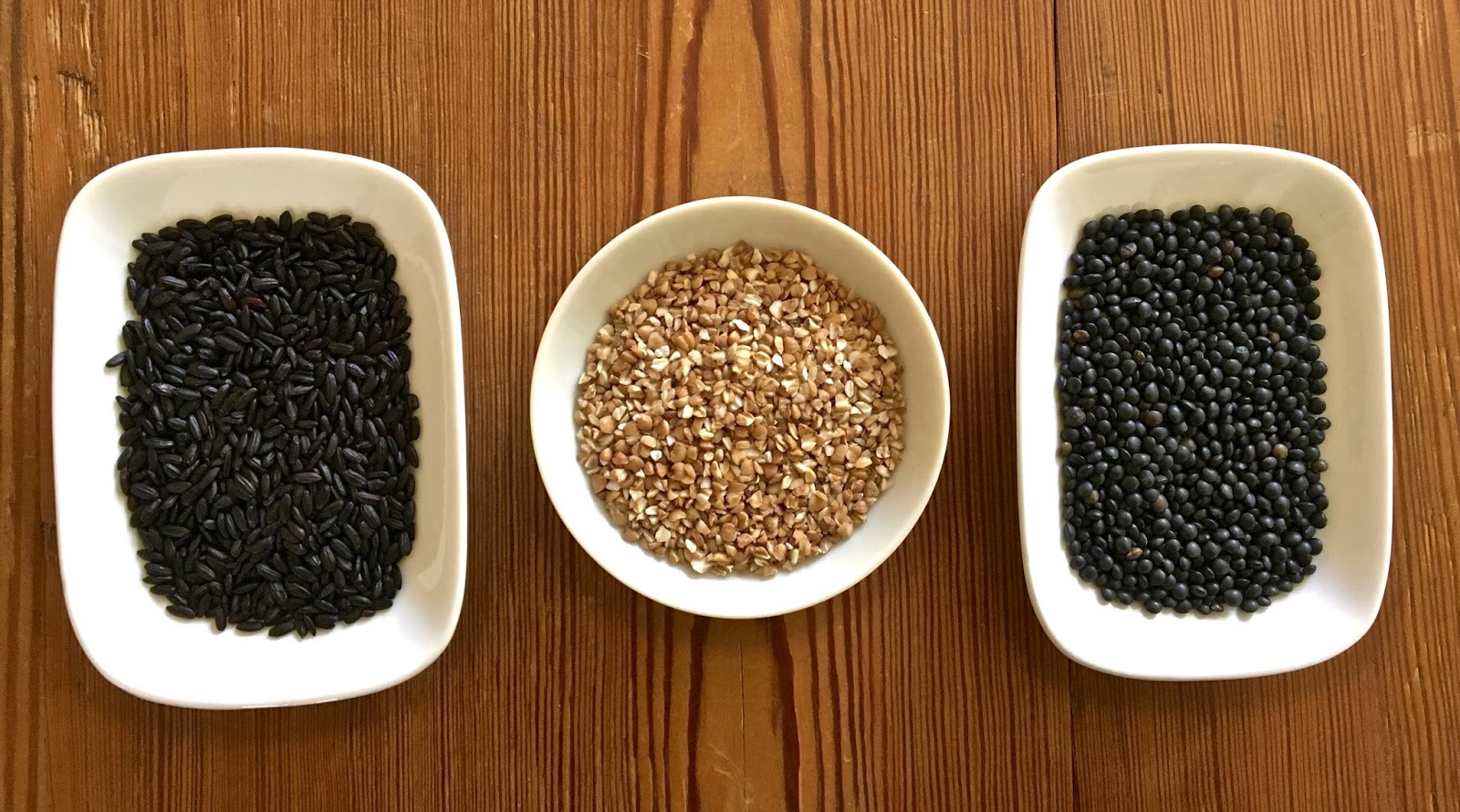
1 cup black beluga lentils
1 cup black "forbidden" rice
1/2 cup kasha (buckwheat groats)
2 whole garlic cloves, unpeeled
1 bay leaf
5 cups fresh water
1/4 + teaspoon  sea salt
6 whole dried black shiitake mushrooms


Method:

Measure lentils, rice, kasha, water and sea salt into the pot; add garlic and bay leaf.
Carefully place mushrooms, stem down, in one layer on top of the other ingredients.
Cover pot and bring to a gentle simmer. Place a flame diffuser under the pot to prevent scorching.
Continue cooking on a low to medium flame for about one hour.  
Remove pot from heat and allow to rest without opening for fifteen or twenty minutes.
Open pot and remove mushrooms, garlic cloves and bay leaf.
Place mushrooms on a cutting board and slice into small pieces.
Peel garlic- it will be very soft- and return it and the mushrooms to the pot.
Toss all ingredients with a fork; add more sea salt to your taste if desired.
Serve with any lightly steamed dark leafy green.


Wednesday, September 28, 2011

Onigiri: Honorable Rice Ball!


There is no more delicious and satisfying convenience food than the wonderful gem of Japanese cuisine, onigiri. For centuries, travelers have carried rice balls on short and long journeys, and today they are a beloved comfort food in Japan, where many specialty shops are devoted solely to the making and selling of onigiri.

Onigiri (also known as omusubi) can be very simple, consisting of nothing more than cooked rice, or they can be creative works of art which reflect the chef's imagination and skill. Rice balls always contain salt, tamari or pickled ingredients which act as preservatives, keeping the rice from spoiling. Pickled umeboshi plums are a favorite traditional filling.

Only short grain or medium grain rice should be used to make onigiri; long grain does not have the proper consistency. Although white rice is most popular, brown and black rice make flavorful, nutritious onigiri. Correctly cooked rice- not too soft or hard- is essential for the rice balls to retain their shape. Round, cylindrical and triangular shapes are made by hand but many varieties of inexpensive molds, one of which is seen in the photo above, are available with which anyone can make perfectly shaped rice balls.

Black rice makes stunningly beautiful onigiri. Unwrap one of these on an airplane and your seatmates will be terribly envious. Pack a handful of sliced raw vegetables and enjoy a healthy, inexpensive meal with roots in an ancient tradition. You will understand with the first bite why the honorific "O" is included in the spelling of onigiri, which means "honorable rice ball".

Wednesday, September 14, 2011

Forbidden Rice


In ancient days in China, according to legend, black rice was reserved exclusively for the Emperor and his court; commoners were forbidden to eat it. Black rice was prized for its exotic purple- black color, nutty sweet flavor and especially for its potent medicinal qualities.

The distinctive color of black rice is caused by the presence of high levels of anthocyanins, a class of antioxidants which are also found in many plant foods including blueberries, blackberries, raspberries, strawberries and purple cabbage. Research into antioxidant nutrients suggests that they contain valuable health protective properties. Black rice is also an excellent source of protein, vitamins and minerals, including iron, and has even more fiber than brown rice.

One of the advantages of black rice is the small size of the grains which cook more quickly than other rice varieties. Exact cooking time may vary a bit but black rice requires only about 30 minutes to cook thoroughly. If you prefer softer, less chewy rice, soak for a few hours before cooking.


Basic Black Rice:

1 cup black rice
1+3/4 cups water
1 pinch sea salt
1/4 teaspoon olive oil

Place ingredients in a pot with a thick bottom and close fitting lid. Bring to a simmer, cover, and cook over a low flame for about 30 minutes. (A flame tamer placed under the rice will prevent scorching). Fluff rice with fork or chopsticks, turn off heat, cover and allow to rest for at least 10 minutes before serving. Yield: About 3 cups cooked rice.

Thursday, February 5, 2009

Okayu: Japanese Rice Porridge

Okayu is a traditional rice porridge eaten in Japan by babies, elders, sick people, and almost everyone else. Every Asian culture makes its own version of rice porridge which is simply rice cooked in water until very soft and served with an infinite variety of garnishes. Okayu is usually the first solid food given to infants and is often served for breakfast or a late night meal; it's the favored food of those suffering from colds and flus or other illnesses. This is comfort food at its best! Use any good quality white rice. Makes about two servings.

1/2 cup white rice, rinsed and drained
3 cups fresh water
1- 2 pinches sea salt

Place ingredients in a heavy bottomed soup pot, cover, and bring to a gentle boil. Simmer on a low flame for at least 30 minutes. (You may vary the proportion of rice and water to attain the thickness you prefer).

Garnishes: During cold and flu season, serve steaming hot okayu with thin slices of fresh ginger root and green onions. Sprinkle with some toasted sesame seeds if available. It's traditional to add one umeboshi plum to each bowl. Umeboshi are sour-salty pickled plums available in Japantown and natural food stores. 

Umeboshi Vinegar:
 
Pictured below is a bottle of umeboshi vinegar, which may be used instead of whole ume plums. It is the liquid brine (it contains no vinegar) in which the plums are aged. It is very flavorful but quite salty so use sparingly. Delicious on savory grain and vegetable dishes!


Monday, August 25, 2008

Barley Rice/ Mugimeshi

One of my favorite brown rice recipes is "mugimeshi", a traditional Japanese dish made by steaming barley and brown rice together in one pot. If you appreciate the satisfying flavor and texture of whole unprocessed grains, you will return to mugimeshi again and again. Use the same cooking technique as for brown rice; steam two parts water to one part grain. (For nutrition information, see "Brown Rice Basics" post.)

1 cup short grain brown rice
1/2 cup barley
3 cups fresh water
1/4 teaspoon sea salt
1/4 teaspoon olive oil

Place all ingredients in a heavy bottomed pot with a tight fitting lid. Cover and bring to a gentle simmer, place flame tamer under pot, and continue cooking on a low flame for one hour. Grain should be tender but not mushy. Turn off heat and allow mugimeshi to rest for about 10 minutes before serving.

Serve with vegetables as you would other cooked whole grains. Or, for a traditional and elegantly simple presentation, serve in small bowls topped with nori slices and toasted ground sesame seeds. (A recipe for making your own toasted and ground sesame seeds called "gomasio" will follow).

Friday, August 8, 2008

Brown Rice Basics

There are many techniques for cooking brown rice but this is the one to which I always seem to return. It requires only a heavy bottomed pot with a cover which fits well enough to hold in the steam as the rice cooks. If you own a flame tamer to place under the pot, that will keep the rice from sticking or burning if you happen to wander away from the kitchen. I usually use short grain organic brown rice, but long grain can be used also, or a combination of both.

1-1/2 cups organic brown rice
3 cups fresh water
1/4 teaspoon sea salt
1/4 teaspoon olive oil

Place ingredients in pot and cover. Bring to a gentle simmer, place flame tamer under pot, lower heat, and cook for one hour without opening the pot. Turn off heat and allow rice to rest for ten minutes. Makes about 2 servings. Cooked rice keeps well for several days in the fridge in a covered container.

Note: If you can plan ahead, pre-soaking the rice for about six hours or overnight will reduce cooking time and produce a delicious result. Just place rice and water in pot and let sit in a cool place. Before cooking add salt and olive oil; then cook as directed for about 50 minutes.

Tuesday, July 29, 2008

The Tao of Rice

When the Dow is down, the price of petroleum and almost everything else is up, and life in general looks a little rocky, I don't call my broker, my therapist, or my spiritual adviser. I pull out a bag of organic brown rice, my ancient stainless steel rice pot, and get cooking. The ultimate "slow food", brown rice cannot be prepared or eaten in a hurry. An hour spent in the kitchen making a fragrant batch of this simple grain is a perfect antidote to the up and down cycles of life in the turbulent 2000's.

Although anthropologists do not agree on exactly when humans began rice cultivation, there is good evidence that large scale rice farming dates at least as far back as 5000 BCE. Before the era of domestication, people gathered wild rice. Today rice provides one fifth of all the calories consumed by the earth's human inhabitants.

Most rice eating cultures place a high value on "white" or milled rice. Milling removes the outer layer of bran, leaving a light colored, faster cooking grain, an important consideration in countries where cooking fuel is a serious budgetary factor. However, the rice bran contains important B vitamins, minerals, and essential oils, all of which are lost in the milling process.

Japanese prison inmates today are routinely fed brown rice and barley, which are cheaper than white rice and viewed as low- status foods by the general population. A study done on inmates at the Fukushima prison found that prisoners with type two diabetes experienced a dramatic improvement in their blood sugar levels during their time as inmates and were able to reduce or discontinue their diabetes medications. This outcome was attributed in part to the high level of dietary fiber and nutrients in brown rice and barley.

Brown rice first gained popularity in America in the 1970's, when a wave of heightened consciousness about healthy food spread across urban and university culture, where it became emblematic of a new approach to eating and marked a significant departure from the t.v. dinners and meat and potato diet typical of the post war Eisenhower era. Now widely available in natural food stores, brown rice has become main stream enough to be featured in recipes published recently in The New York Times.

Although learning the tao of rice takes a little time and patience, its rewards are many. No matter where the Dow is, a simple brown rice meal always tastes great, costs pennies, and provides quality nutrition and shelter from any storm.

(Coming soon: Basic Brown Rice Recipe)