Showing posts with label raw food. Show all posts

Thursday, April 4, 2024

Black Radish Quick Pickle


 Scrub two or three medium black radishes, rinse and pat dry. Cut radishes into matchsticks. Toss well with freshly minced garlic, juice from one lemon and sea salt to taste. Let sit in a bowl for a few hours; stir once or twice. Garnish with lemon peel or zest; toss and enjoy!  Store in a glass jar in fridge. 

Sunday, September 13, 2020

Ginger- Lime Cabbage Salad


Ginger- Lime Cabbage Salad:  

This delicious, crunchy, sweet- tart salad is simple to assemble and rich in nutrients. Cabbage is a stand by staple in my fridge year- round; it keeps well and is easily transformed into an variety of cooked or raw dishes. The ingredient proportions below are approximate;  no need to measure exactly. Shred the cabbage as finely as possible to ensure optimal blending of the flavors. Yields about four servings.


Ingredients:

1/2 head green cabbage, finely shredded

1/2 head purple cabbage, finely shredded

2 tablespoons finely chopped fresh ginger root

2 cloves garlic, finely chopped

1/4 cup olive oil

1/4 cup rice vinegar

juice of 1- 2  limes

1/4 teaspoon sea salt, or to taste


Method:

Combine ingredients in a large bowl and toss very thoroughly.

Taste and adjust seasoning to your liking.

Store in clean glass jars for up to 3 days in fridge.

Flavor will improve as the ingredients merge.


Serving Suggestions:

Serve chilled or at room temperature.

Garnish with any combination of lime slices, toasted chopped hazelnuts, toasted chopped almonds, toasted sesame seeds, red pepper flakes.


Monday, July 10, 2017

On Perfection, Evolution & Summer Pleasures


Though human perfection does not exist, Homo sapiens is imbued with the evolutionary drive to seek perfection in all things.  Perhaps this  impulse is linked to the survival instinct which pushed our species to hunt for the best food, partners, comrades and environments. 

There is tension inherent in this search, for ultimately, one must make a choice.  Certain choices are crucial, and will resound in our lives for decades. Other choices are simpler; which sunflower, which artichoke, which peach shall we select?  

Such are the small, weightless pleasures of summer, when there is an abundance of nearly  perfect produce to enjoy.


***
inanimate perfection?


Wednesday, April 26, 2017

Meditation on a Black Radish

Black Radish

The black radish, with its rough thick outer shell and pure white pungent bitter interior, is the dark horse of the radish universe. Cultivated by farmers since the days of ancient Egypt, Raphanis sativus var. sativus tolerates extremes of climate, grows to a generous size and contains considerable quantities of vitamin C.

 I am told that the black radish, which stores very well, was a staple food for my Eastern European ancestors during long cold winters when few fresh vegetables were available. It was peeled and sliced and eaten with raw onion, salt and heavy dark sourdough rye bread. In France it is known as "Gros noir d'hiver",  or "large black of winter".


                                             black radish
                                             your rhino hide shell
                                             protects a bitter snowy core
                                             from which the lovely
                                             green shoots spring


Thursday, September 15, 2016

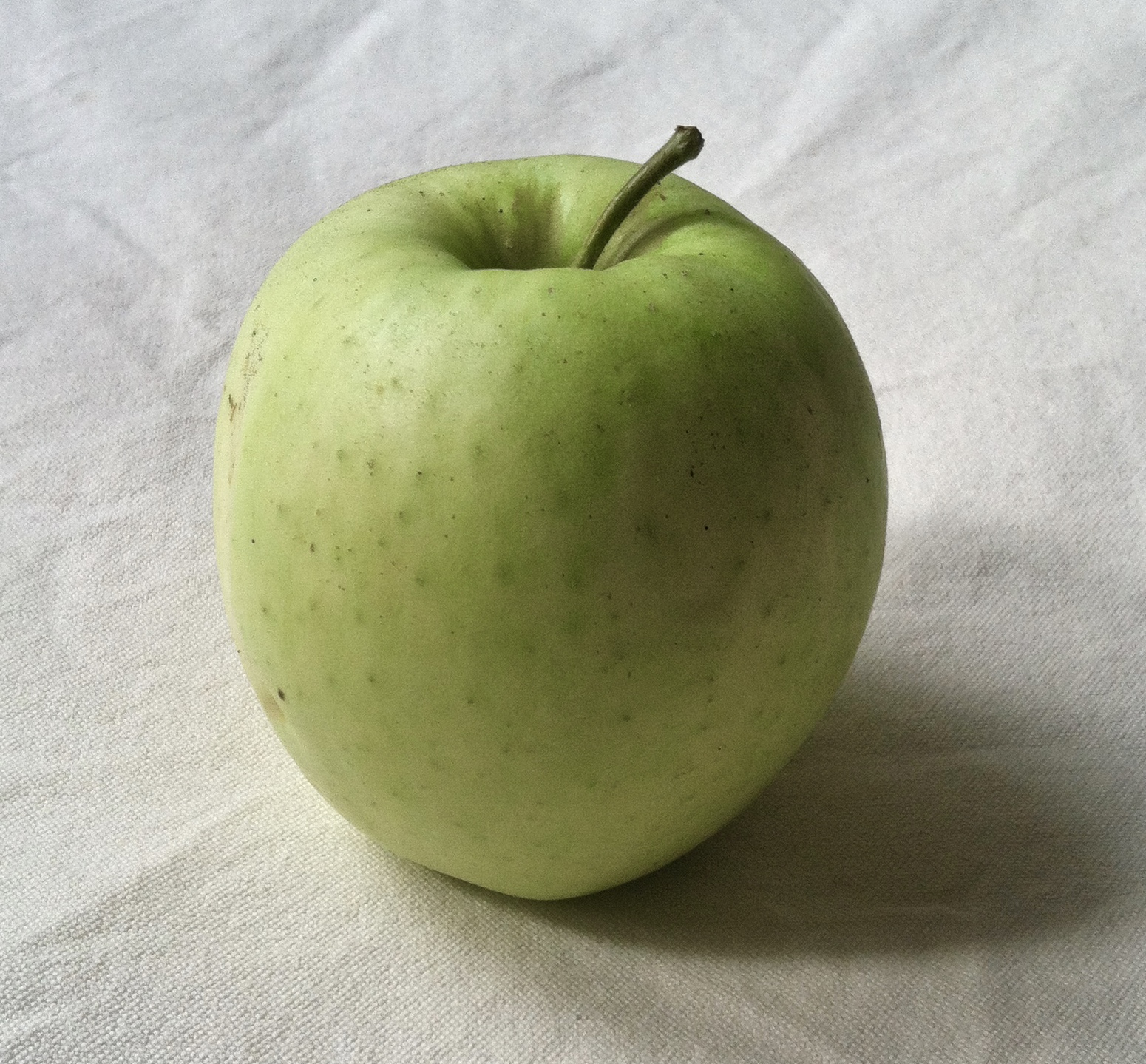
Of Autumn, Apples and Poetry


Autumn is a time to pause for reflection as the heat, light and activity of Summer diminish; it is a distinct period of transition between the expansive warm energy of Summer and the cold contracting energy of Winter, a time to let go of the pleasures of Summer and to gather and safeguard food and fuel for the season ahead when the earth freezes and growth ceases.

According to traditional Asian medical theory, the Lung is the organ system associated with Autumn; it is closely connected to our external environment via the nasal passages and throat and is vulnerable to changes in temperature and atmosphere. (I remember noticing while traveling in the chilly highlands of Guatemala that women habitually covered their noses and mouths with a shawl during cold weather, when the wind blew or when riding on a bus with open windows).

The energy (Qi) of the Lungs can be supported by eating specific foods, like the fruits which are now in season: apples, pears, grapes and persimmons. These are thought to protect the Lungs by keeping them slightly moist and cool, rather than too cold, dry, hot or damp. Spicy, pungent foods like ginger root, radishes, leeks, onions and garlic also benefit the Lungs by gently increasing local circulation. Appropriate exercise, adequate sleep and mindful awareness of unsettling thought patterns and excessive emotion are additional ways to protect Lung Qi.


Apples  (By Grace Schulman)

Rain hazes a street cart's green umbrella
but not its apples, heaped in paper cartons, 
dry under cling film.  The apple man,

who shirrs his mouth as though eating tart fruit,
exhibits four like racehorses at auction:
Blacktwig, Holland, Crimson King, Salome.

I tried one and its cold grain jolted memory:
a hill where meager apples fell so bruised
that locals wondered why we scooped them up,

my friend and I, in matching navy blazers,
One bite and I heard her laughter toll,
free as school's out, her face flushed in the late sun.

I asked the apple merchant for another,
jaunty as Cezanne's still-life reds and yellows,
having more life than stillness, telling us,

uncut, unpeeled, they are not for the feast
but for themselves, and building strength to fly
at any moment, leap from a skewed bowl,

whirl in the air, and roll off a tilted table.
Fruit-stand vendor, master of Northern Spies,
let a loose apple teach me how to spin

at random, burn in light and rave in shadows.
Bring me a Winesap like the one Eve tasted,
savored and shared, and asked for more.

No fool, she knew that beauty strikes just once,
hard, never in comfort. For that bitter fruit,
tasting of earth and song, I'd risk exile.

The air is bland here. I would forfeit mist
for hail, put on a robe of dandelions,
and run out, broken, to weep and curse- for joy. 


"Apples" from The Broken String by Grace Schulman, Houghton Mifflin 2007.


Wednesday, August 17, 2016

Tomato, Tomatl, Solanum Lycopersicum!


The tomato is a fruit of many colors, shapes and names, and summer is the time to revel in its heady acidic sweetness. Though greenhouse tomatoes are available year round, a tomato in winter is but a pale imitation of robust fruit grown in healthy soil under the hot summer sun. 

Tiny wild tomatoes were native to South and Central America and were first cultivated by the Inca and Aztec peoples around 700 CE.  The Aztecs learned to breed large flavorful specimens which they called "tomatl" meaning "fat fruit" or "plump fruit" and "xitomatl" meaning "plump fruit with a navel" in the Nahau language.

Spanish explorers introduced the fruit which they called "tomate" to Europe in the sixteenth century; eventually it gained extensive culinary use throughout the continent and beyond. The Italians named it "pomodoro" or "golden apple" and the French call it "pomme d'amour", "apple of love". In Russia, home of the famous heirloom Black Krim,  the fruit is called "pomidor".


Known botanically as Solanum lycopersicum, tomatoes belong to the large family Solanaceae which includes potatoes, eggplants, peppers and tobacco. The etymological roots of Solanaceae are unclear, but Lycopersicum  as translated from Greek means "wolf peach", "lyco" meaning "wolf" and "persikon" meaning "peach". The "wolf peach" name may stem from early European folklore involving witchcraft and werewolves. Tomatoes were long thought to be poisonous since they belong to the nightshade family, which includes some deadly varieties.

Far from being poisonous, tomatoes are dense with valuable nutrients, especially lycopene, a powerful antioxidant which gives tomatoes their deep color and is thought to offer protection from several types of cancer and coronary artery disease. Tomatoes also contain plentiful amounts of vitamin C, potassium and fiber, and a 100 gram serving provides nearly a gram of protein. 


Tomato, tomatl, Solanum lycopersicum; whatever name you give it, the plump fruit of the Aztecs and Incas is one of the finest simple pleasures of summer. 


Thursday, July 7, 2016

Farmer's Markets: Where the Real Food Is


One of the great luxuries of life in Northern California is the accessibility of quality produce year round. Even in winter, a variety of fresh vegetables and fruits are available from regional farms. In San Francisco, neighborhood farmer's markets provide urban residents the opportunity to deepen their understanding of seasonal growing cycles and to become familiar with a broad range of produce which is seldom available commercially.


In our earliest millennia as a bipedal species, our primary occupation was to search for and gather our food. Anthropologists observe that foraging peoples walked an average of three to five miles a day in search of a remarkably diverse selection of edible plants, roots, nuts, berries and fruit. Our ancestor's survival hinged upon their knowledge of where each of many varieties of food was located in its season and the ability to gather it. Energy, intelligence and perseverance were critical to this task; our motivation was hunger. Homo sapiens succeeded in this endeavor well enough to reproduce and pass on the human genome from generation to generation.


Many thousands of years later, this essential human project has turned upside down. Moderns have little need to gather their own food, and little time to prepare it. Most of us spend our days (or nights) earning money with which to purchase our food, much of which bears faint resemblance to that of our forager ancestors. A vast assortment of what Michael Pollan calls "edible food like substances" is readily available in supermarkets and few calories are consumed in the effort to acquire it.

These changes have created a deep disconnect between humans and their sources of food, a decline in food intelligence and a troubled relationship between the instinctive drive to eat and an oversupply of aggressively marketed low quality calories. There is much confusion surrounding food choices and eating styles which has engendered a huge proliferation of widely variable and contradictory information about nutrition and health. Lost in the deluge of advertising and misinformation are the essential unprocessed foods which once were the sole components of our diet.

Farmer's markets offer honest commerce on a human scale. They bring farmers and shoppers together in venues where an abundance of the real food which truly nourishes and sustains us can be found. 


Wednesday, May 18, 2016

Stone Fruit: The Naked Truth


Although San Franciscans are still sporting fleece and down jackets, the arrival of the first stone fruits in Bay Area farmer's markets hints that summer is near. Apricots, peaches, nectarines and cherries are already brightening foggy market days. There is much to look forward to in the coming months for those who cherish the fragrance, flavor and beauty of the fruit of the trees.


Fresh, raw and naked is the best way to enjoy summer stone fruits. Quality fruit is bred for flavor, not shelf life or cosmetic perfection. Smaller fruit with a few blemishes may be far superior in taste and nutritional value to oversized picture perfect commercial produce. Farmer's markets provide the opportunity to sample different varieties of fruit and to consult with the vendors about how to select, ripen and store it.

Transport your fruit home from the market with care. Separate very ripe or slightly bruised specimens immediately; fruit salads and smoothies can be made with them in minutes. Many stone fruits can be held at room temperature for a few days or more. Don't wash the fruit until you are ready to eat it. Place fruit on a clean dry surface, leaving a little space between each piece.


Check the fruit daily and set aside the ripest to be eaten that day. With proper handling, your collection of stone fruit can be savored all week at peak flavor. Simply wash and nosh! When the next market day arrives you will be eager to replenish your supply of some of nature's finest creations.


Wednesday, April 13, 2016

Spigariello? It's not an opera!


With the current proliferation of local farmer's markets across the country comes the opportunity to discover unusual varieties of produce which one would not find in commercial markets. A recent revelation is this lovely Spigariello, an heirloom Italian kale in the brassica family. Its full name as listed in seed catalogues is "Cavolo Broccolo Spigariello Foglia Riccia".


Like Lacinato kale (above), Spigariello is tender and uniquely flavorful, with small dark blue-green leaves. It can be sauteed, steamed, eaten raw in salad and smoothies or added to soups and stews. Both varieties are subtle in taste with no hint of bitterness and are more delicate than the common curly kale which has become popular of late.

There is nothing mysterious or difficult about preparing leafy greens. Lightly sauteing them in olive oil creates a flavorful nutritious dish in minutes. The only tools needed are a knife, a cutting board and a skillet.

How to saute a dark leafy green vegetable in olive oil:

Rinse the greens and shake off or blot excess water. If the leaves have thick central stems, cut them away from the leaves. Chop the stems into small pieces. Then stack the leaves and slice; thin slices will cook more quickly than thick. Remember that the volume of the greens will reduce greatly during cooking, so judge the quantity you begin with accordingly.


Heat some olive oil in a heavy skillet-  just enough to cover the surface of the pan. Add the chopped stems first, since they are denser and need a little more cooking time. After a minute or two, add the leaves and continue to saute over a medium flame, stirring occasionally until just tender; this should take only three or four minutes. Taste the greens. If they are not tender enough, continue cooking another minute or so. Add a bit more olive oil if the greens are sticking to the pan.

Serve sauteed greens immediately in a preheated bowl, sprinkled with a little sea salt to taste and perhaps some freshly ground black pepper. 


Cavolo Broccolo Spigariello Foglia Riccia


Wednesday, August 12, 2015

The Essence of Summer, Season of Joy


According to the traditional Asian calendar, Summer is the Season of Fire, the time of "Ultimate Yang". Energy is high, daylight is plentiful and growing things flourish and reach the apex of their ripeness and fullness. This is the season of the Heart, whose dominant emotion is Joy.


Midsummer farmer's markets in Northern California are brimming with exquisite produce of the utmost freshness and flavor. Almost everything I have sampled in recent weeks is of extraordinary quality.


This is the time to revel in the abundant colors, flavors and fragrances of nature. Farmer's market  purveyors offer many luscious varieties of produce such as plums, peaches and nectarines which are seldom found in commercial supermarkets.


Don't forget to select red, yellow and orange sweet peppers, crimson dry farmed tomatoes, fragrant melons and bunches of aromatic basil. (If you can't use all the basil, tie a cotton string around the stems and hang it up to dry in a warm spot in your kitchen for later use.)


Produce of this quality is dense with nutrients, requires little preparation and is great for casual snacks and meals. Ultra ripe fruit is at its best eaten out of hand. Make a simple gourmet meal with sliced dry farmed tomatoes sprinkled with olive oil, sea salt and fresh basil leaves. Eat slowly and savor the essence of Summer, the Season of Joy.


Wednesday, April 1, 2015

Mallow: Not Just A Common Weed!


If you live in San Francisco, you've walked past wild mallow plants growing out of cracks in the sidewalk, in neglected gardens and other untended patches of urban land. A hardy plant which appears early in the spring, the common mallow is one of the many members of the botanical family Malvaceae which includes hibiscus, okra and cotton.

All parts of the mallow are edible; roots, leaves, seed pods and flowers. Mallow has been foraged for centuries for use as a highly nutritious food and and as a versatile medicinal herb. It thrives in poor soil and requires little water, and thus has been a valuable resource in times of food shortage.


Young mallow leaves are tender and mild, with no hint of bitterness. They can be used like any other leafy green - raw in salads, steamed, sauteed or even blended into smoothies.  Mediterranean and Middle Eastern cooks add them to traditional stews; the large mature leaves are used as wraps in place of grape leaves. The seed pods are high in protein and healthy vegetable oils.


Our prehistoric ancestors survived for millennia on their impressive ability to gather and hunt wild foods. Many edible plants thrive in urban settings, though they are usually dismissed as nothing more than nuisance weeds. Learning about wild plants provides us with a valuable connection to our ancient origins and an appreciation for the vast changes in our food supply and the manner in which it is procured.

Foraging should always be undertaken with caution. For those who wish to learn more, there are many informative web sites devoted to the topic. Here is the link to one such site:

www.superfoods-for-superhealth.com/mallow-plant-nutrition.html


Mallow Seed Pods


Wednesday, February 18, 2015

Almost Spring: Citrus - Mango Smoothie


Plum blossoms, blood oranges, Minneola tangerines, Ruby Red grapefruits and Lunar New Year signal the arrival of Spring in San Francisco. Farmer's markets are flush with colorful fresh citrus fruit, perfect for creating delicious smoothies like this citrus- mango combo, which can be made in a minute or two.


Dried mango slices are a versatile all- season pantry staple. When re-hydrated and blended into smoothies, they add velvety texture, valuable nutrients and a subtle tropical flavor. To re-hydrate, place a handful of mango slices in a glass jar and add water to cover. Mangoes will be soft enough to use in about an hour but can be stored in the fridge for up to three or four days in the jar of water.


Citrus - Mango Smoothie

2 or 3 medium blood oranges or Minneola Tangerines
3-4  mango slices, re-hydrated
1/2 cup mango soaking water

Use any combination of citrus.
Remove peel and seeds, slice into chunks.
Place citrus, mango slices and water in blender and process on high until smooth. If needed, add a little more water.  Serve immediately.  (Yields about one serving).


Monday, January 12, 2015

Wakame + Watermelon Radish = A Super Salad


This is a dish to create when time is plentiful and distractions are few. It involves some meditative chopping, slicing and a little toasting, all of which can be done ahead of time. The sweet, sour and spicy flavors of the salad are enhanced if it is allowed to rest for a few hours or even a day before serving. Yield: About four portions, but if you really love sea vegetables, you might want to double the recipe.

Ingredients:

1 ounce dried wakame sea vegetable*
4 medium watermelon radishes
3 tablespoons unseasoned rice vinegar
fresh juice of 2 lemons
1 tablespoon maple syrup
1 teaspoon hot pepper sesame oil 
1/4 teaspoon sea salt or to taste
3- 4 tablespoons sesame seeds, freshly toasted


Method:

Rehydrate wakame by placing it in a bowl with enough cool water to cover. Let it rest for about five minutes, then drain and squeeze out excess water with your hands. Using a sharp knife and clean cutting board,  slice the wakame into thin strips. The tough center ribs of the plant can be set aside for later use in soup, or simply slice them very fine and use in the salad.


Scrub and trim radishes.


Slice radishes into rounds.


Julienne rounds into matchsticks.


Toast sesame seeds in a heavy skillet until just fragrant, then pour into a ceramic plate to cool.


Combine vinegar, lemon juice, maple syrup, sesame oil and sea salt in a bowl and whisk together briefly. Add the sliced wakame and radish and toss gently to coat the vegetables. Sprinkle with about half the toasted sesame seeds, reserving the remainder to use as a garnish at the table. Salad will keep well in a clean glass container for up to three days.


* Wakame sea vegetable is sold dried, often in one ounce packages. 

Variation: Add one good quality crisp apple, sliced into matchsticks.